
RF Microneedling: A Medical Procedure, Not Just a Beauty Treatment
A balanced guide to radiofrequency microneedling for texture, acne-related scarring and rejuvenation, including important safety considerations.
Service note: This is an independent educational guide. The centre does not currently offer RF microneedling.
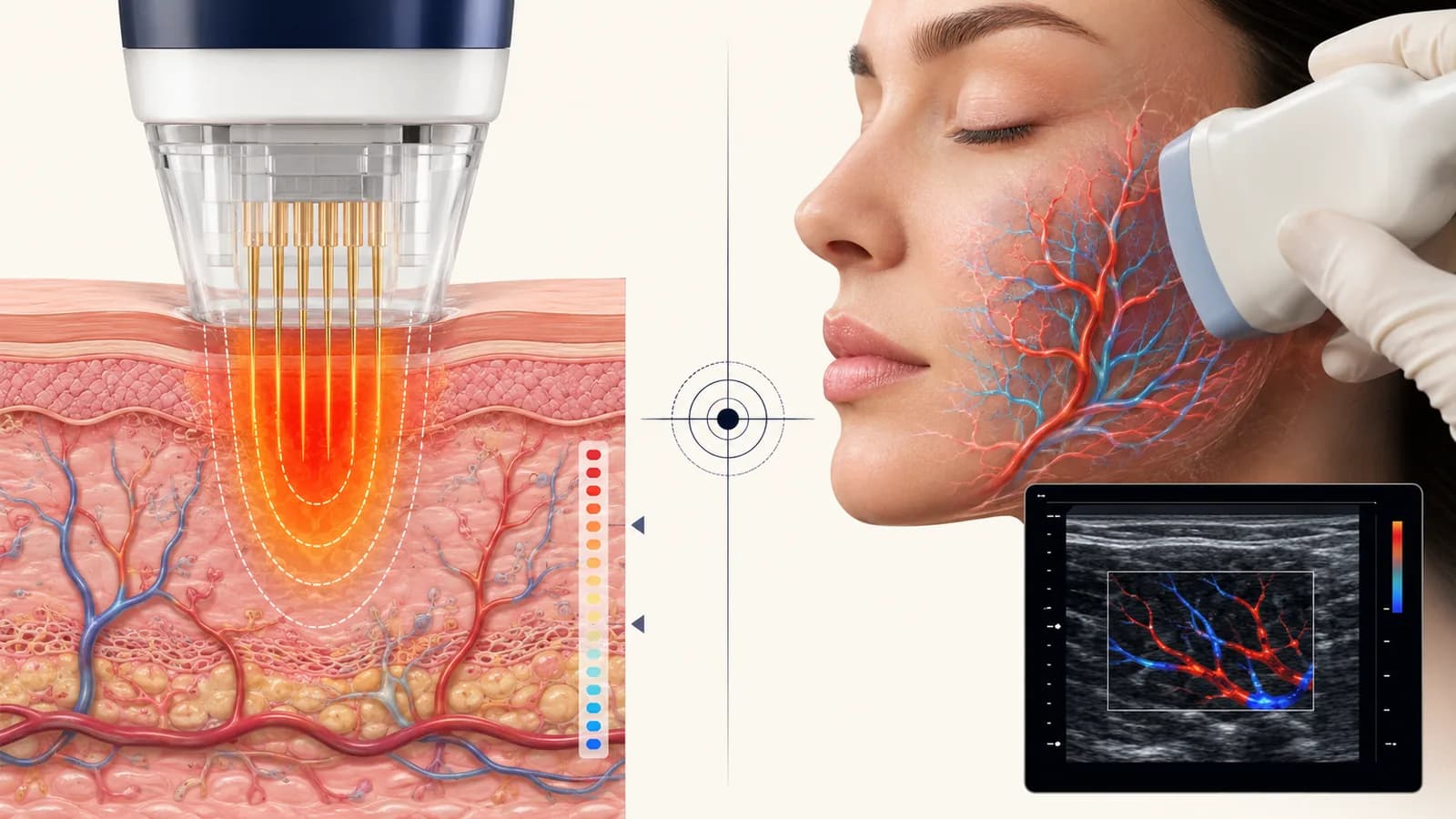
Radiofrequency microneedling combines needle penetration with radiofrequency energy. The microneedles enter the skin at selected depths and deliver energy that creates controlled heating in targeted tissue. The treatment aims to stimulate a repair response while limiting injury to surrounding structures.
The word “controlled” matters. Needle depth, energy, pulse duration, treatment density, anatomical area, skin type and previous procedures all influence both outcome and risk. Settings should not be copied from one patient to another without assessment.
Which concerns may be considered?
RF microneedling is used in treatment plans for selected concerns involving acne-related scarring, texture, pores, fine lines or mild laxity. Evidence reviews report encouraging outcomes across several applications, but study designs, devices and protocols vary. Multiple sessions are common in published studies, yet the correct schedule is individual.
What recovery may involve
Temporary redness, swelling, tenderness, dryness, roughness, pinpoint bleeding, peeling or crusting may occur. Pigment change, infection, herpes reactivation and scarring are possible. Recovery depends on treatment intensity, area, skin characteristics and aftercare.
Why recent safety warnings matter
In October 2025, the US FDA issued a safety communication after reports of serious complications with certain uses of RF microneedling, including burns, scarring, fat loss, disfigurement and nerve damage. This does not mean every treatment causes these outcomes, and US regulatory status does not define Iranian clinical practice. It does mean patients should reject casual descriptions of RF microneedling as risk-free.
Device identity, appropriate settings, practitioner training, anatomical knowledge and follow-up arrangements deserve direct discussion.
Before treatment
The clinician should assess active acne or infection, tendency to pigment change or scarring, relevant medication, implanted devices, previous energy-based procedures and other medical factors. Treatment over inflamed or infected skin may need to be postponed.
Questions to ask
- Which device will be used?
- Why are these depth and energy settings appropriate for me?
- How does my skin type affect pigmentation risk?
- What outcome is realistic for my type of scar or texture concern?
- What aftercare is required?
- Which symptoms require urgent review?
The practical conclusion
RF microneedling may be valuable when the indication and settings are correct. The best plan is not the most aggressive plan; it is the one that balances a realistic target against the lowest reasonable risk for the individual.
References
These sources informed this guide. A source reports its own findings and does not establish that a treatment is suitable for any individual.
- FDA: Potential Risks with Certain Uses of RF Microneedling — US Food and Drug Administration
- FDA: Microneedling Devices — US Food and Drug Administration
- RF Microneedling for Facial Rejuvenation: Systematic Review — PubMed
- Fractional RF Microneedling for Acne Scars: Systematic Review — PubMed