
Endolift for Face and Body: What Patients Should Know
An evidence-aware guide to Endolift, including mechanism, suitable concerns, limitations, recovery and questions to ask before treatment.
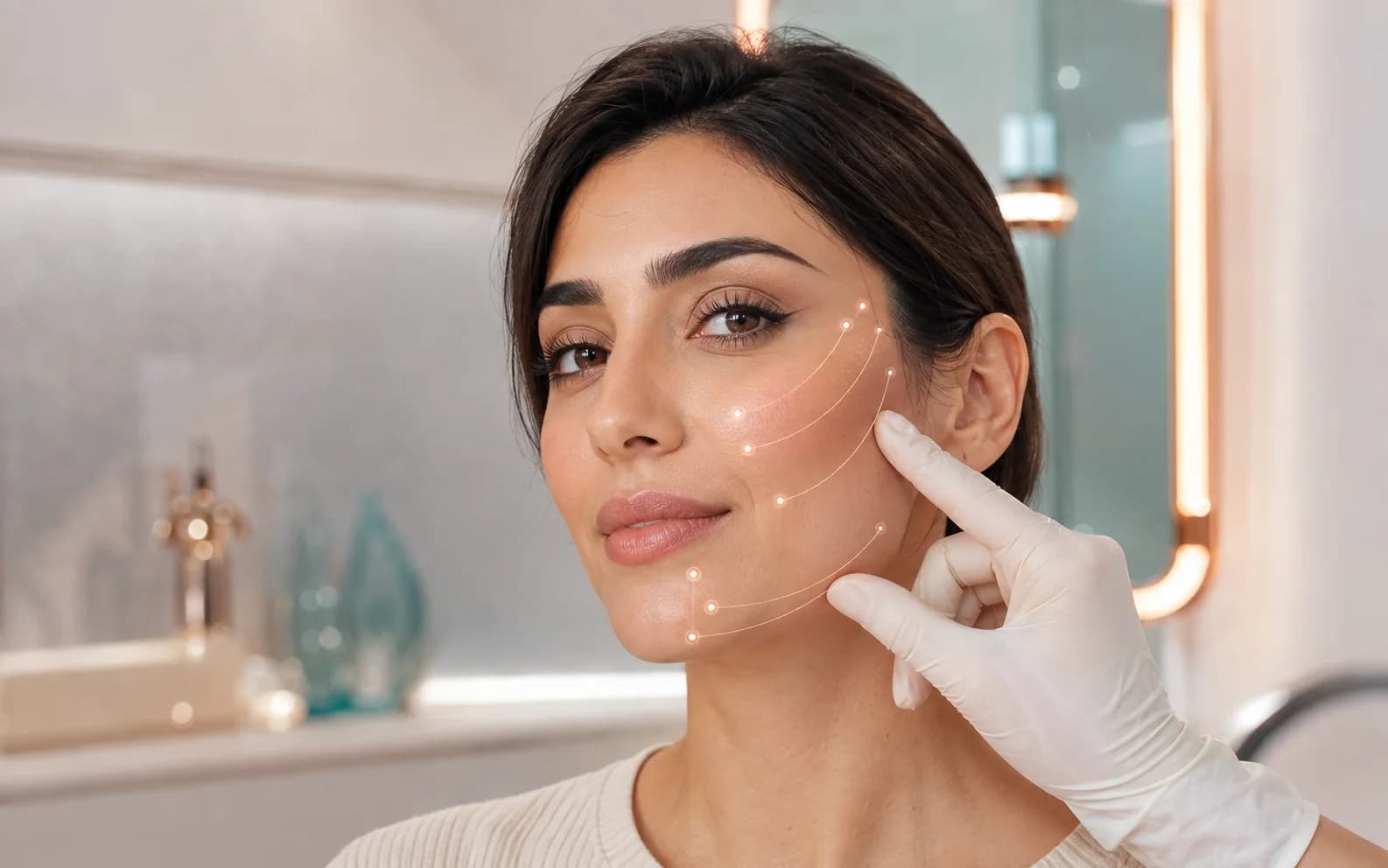
Endolift is a minimally invasive, laser-assisted procedure in which a fine optical fibre is guided beneath the skin. The platform used for Endolift delivers 1470 nm laser energy. This wavelength is strongly absorbed by water and also interacts with adipose tissue, allowing controlled heating within selected tissue planes.
That technical description does not mean every person with skin laxity or localised fat is a suitable candidate. The treatment area, tissue thickness, skin quality, medical history and desired degree of change must all be assessed first.
What is Endolift intended to address?
Depending on anatomy and the treatment plan, Endolift may be considered for mild-to-moderate laxity, contour definition or selected small areas of localised tissue. Facial discussions often involve the lower face, jawline or submental area. Body discussions may involve areas such as the abdomen, waist or upper arms.
Endolift is not a general weight-loss treatment. It is also not automatically an alternative to surgical lifting or liposuction. When laxity or tissue volume is substantial, another procedure may offer a more realistic outcome.
How does treatment planning work?
The clinician must identify the correct tissue plane and select fibre size, energy delivery and treatment pattern for the area. A consultation should cover previous procedures, relevant medical conditions, medication, skin condition and the patient’s tolerance for recovery.
Standardised “one session for everyone” promises are not responsible. Some patients may be advised to have one procedure and observe gradual change; others may need a staged or different approach. Evidence for 1470 nm subdermal laser treatment is developing, but the current literature remains smaller and less standardised than the evidence base for many established surgical procedures.
What might recovery involve?
Experience varies by treatment area and intensity. Temporary swelling, tenderness, redness or bruising may occur. Patients should receive written aftercare and clear instructions about exercise, skin care, medication and when to contact the medical team.
Potential complications of subdermal laser procedures can include burns, infection, contour irregularity, pigment change, prolonged swelling or nerve-related symptoms. The exact risk profile depends on the device, technique, area and patient. This is why Endolift should be approached as a medical procedure, not a casual beauty service.
When do results appear?
Some change may be noticed as swelling settles, while tissue remodelling can develop over time. The scale and duration of improvement vary. Photographs should be standardised, and assessment should distinguish true contour change from lighting, posture, weight fluctuation and camera angle.
Questions to ask at consultation
- Why is Endolift appropriate for my anatomy?
- What alternative treatments should I consider?
- Which device and fibre will be used?
- What result is realistic in my case?
- What are the relevant risks for this area?
- What follow-up and emergency contact arrangements are provided?
The practical conclusion
Endolift can be a useful option for carefully selected concerns, but the decision should come after examination—not from a social-media before-and-after image. Good treatment planning is specific about indication, limitations, technique, recovery and alternatives.
References
These sources informed this guide. A source reports its own findings and does not establish that a treatment is suitable for any individual.
- Eufoton LASEmaR 1500 technical product page — Eufoton
- Applicability of the 1470 Nm Diode Laser in Facial Aesthetics: An Evidence-Based Review — Journal of Advances in Medicine and Medical Research
- In vivo pilot study of the effects of a subdermal 1470 nm diode laser on human skin — Laser Therapy
- Efficacy of Endolift laser for arm and under abdomen fat reduction — Journal of Cosmetic Dermatology