
Natural-Looking Botulinum Toxin Treatment: What Matters Most
A clear guide to expression-line treatment, facial movement, expected effects, limitations and safety.
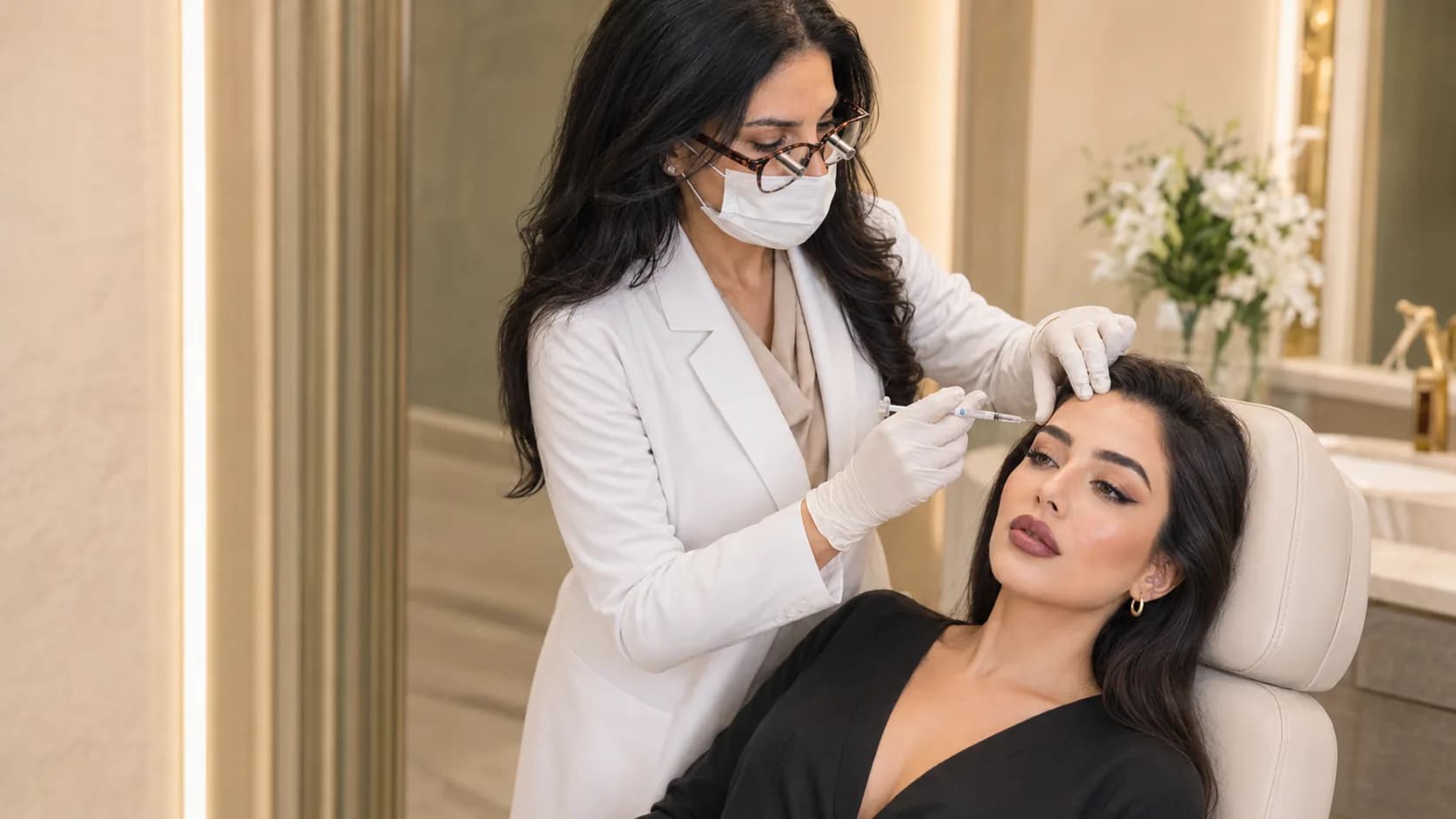
“Botox” is widely used as a general term, but Botox is a brand name; the treatment category is botulinum toxin. Cosmetic botulinum toxin temporarily reduces signalling between selected nerves and muscles. Used appropriately, it can soften specific expression lines while retaining movement that suits the patient’s face.
It is not dermal filler. Botulinum toxin changes targeted muscle activity; filler adds or supports volume in selected tissue planes. Confusing the two leads to unrealistic expectations.
Which concerns may be discussed?
Common consultation areas include frown lines, forehead lines and lines around the eyes. Other uses depend on the product, local regulation, anatomy and clinician judgement. A patient’s brow position, eyelid anatomy, muscle strength, facial asymmetry and previous treatment all affect placement and dosage.
The aim should not automatically be a completely motionless forehead. Excessive or poorly balanced treatment can look unnatural and may contribute to heaviness, brow imbalance or eyelid symptoms. A conservative first plan is often easier to refine than an aggressive one.
When does it work and how long does it last?
The effect is temporary and develops after treatment rather than appearing instantly. Onset, peak effect and duration vary by product, dose, area and individual response. A responsible consultation avoids promising an exact duration for every patient.
Expected reactions and important risks
Temporary injection-site pain, redness, swelling or bruising can occur. Headache, asymmetry, unwanted weakness, brow or eyelid droop and dry-eye symptoms are among the issues that may require follow-up.
Botulinum toxin products carry important warnings about possible spread of toxin effect. Difficulty swallowing, speaking or breathing, generalised weakness or other significant symptoms require urgent medical attention. Patients should receive an authentic, appropriately stored prescription product from a qualified medical professional—not a product purchased through an unauthorised online seller.
Before treatment
Tell the clinician about medical conditions, neuromuscular disorders, allergies, pregnancy or breastfeeding, current medication and supplements, previous botulinum toxin treatment and any recent or planned procedures. Treatment may need to be delayed or avoided depending on the circumstances.
Questions to ask
- Which product will be used and where was it sourced?
- Why were these injection points and doses selected?
- How will my natural brow and eyelid anatomy affect the plan?
- What should I avoid after treatment?
- When should the result be reviewed?
- Which symptoms require urgent contact?
The practical conclusion
Natural-looking treatment depends less on chasing a standard number of units and more on anatomy, product authenticity, precise placement and sensible restraint. The plan should preserve the features and expressions that belong to the patient.
References
These sources informed this guide. A source reports its own findings and does not establish that a treatment is suitable for any individual.
- FDA warning on unapproved and misbranded botulinum toxin products — US Food and Drug Administration